Conference keynote speakers
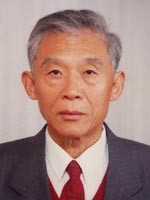
Guoliang Chen
Academician of Chinese Academy of Sciences
Professor of Nanjing University of Posts and Telecommunications
Title: Foundations of Computation Theory for Big Data
Abstract
In computational science, the content of computation theory mainly includes computability, computational complexity, and algorithm design and analysis. This report only discusses the former two issues, and focuses on the computational complexity theory with big data: it mainly includes computation models and computation theories; the computation of P problem and parallel NC problem; the computation of NP problem and its interactive IP problem. Finally, in the conclusion, we present the inclusion relations of various complex problems and the research countermeasures for P and NP problems in the case of big data.
Speaker Biography:
Guoliang Chen is Academician of Chinese Academy of Sciences and is Professor of Nanjing University of Posts and Telecommunications. He is a PhD supervisor and Honorary Dean of School of Computer Science and Technology, Nanjing University of Posts and Telecommunications. Professor Chen is also the Director of Institute of High Performance Computing and Big Data Processing, Nanjing University of Posts and Telecommunications, the Director of Academic Committee of Nanjing University of Posts and Telecommunications, the Deputy Director of the Academic Committee of the Wireless Sensor Network of Jiangsu Provincial High-tech Key Lab. He is the First National Teaching Teacher of Higher Education and enjoys national government special allowance. He received a Ph.D. degree from Xi'an Jiaotong University in 1961. At the same time, Professor He serves as part-time position of Dean of the School of Software Science and Technology, University of Science and Technology of China, Dean of School of Computer Science, Shenzhen University, Director of National High-Performance Computing Center, Director of Instructional Committee of Computer Basic Course of Higher Education Ministry, Director of International High-Performance Computing (Asia), China Computer Society Director and director of the High Performance Computing Professional Committee, etc. And Professor Chen also serves as Director of the Academic Committee of the National Key Laboratory about computer science.
His research interests mainly include parallel algorithms and high-performance computing and its applications. Professor Chen has undertaken more than 20 scientific research projects including the National 863 Plan, the National "Climbing" Plan, the National 973 Plan, and the National Natural Science Foundation of China. A number of research achievements have been widely quoted at home and abroad and reached the international advanced level. He has published more than 200 papers and published more than 10 academic works and textbooks. He won the Second Prize of National Science and Technology Progress Award, the First Prize of Science and Technology Progress Award and the Second Prize of the Ministry of Education, the First Prize of Science and Technology Progress Award of the Chinese Academy of Sciences, the Second Prize of the National Teaching Achievement, the First Prize of the Ministry of Water Resources, and the Second Progress of Anhui Province Science and Technology Progress Awards, 2009 Anhui Provincial Major Science and Technology Achievement Awards, etc. Professor Chen won the 15th anniversary of the advanced personal important contribution award of National 863 Plan, Baosteel Education Fund outstanding teacher's special award, and the glorious title of the model worker in Anhui Province.
For years, Professor Chen has developed a complete set of parallel algorithm disciplines for "algorithmic theory-algorithm design-algorithm implementation-algorithm application" around the teaching and research of parallel algorithms. He proposed the parallel computing research method of "parallel machine architecture-parallel algorithm-parallel programming", established China's first national high-performance computing center, built a parallel research and teaching base for China's parallel algorithms, and trained more than 200 Postdoctoral, doctoral and postgraduate students. Professor Chen is the academic leader in non-numerical parallel algorithm research in China and has a certain influence and status in academic circles and education circles at home and abroad. Academician Chen first established China's first national high-performance computing center in 1995, and successfully developed China's first domestic high-performance general-purpose processor chip Godson single-core, four-core and eight-core, KD-50, KD-60 and KD-90 in 2007, 2009, 2012 and 2014 respectively, which provide infrastructure for cloud computing, big data processing and universal high performance computing in China.
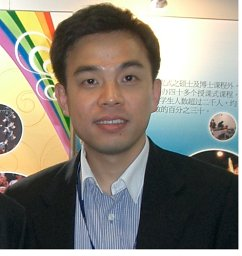
Yiu-ming Cheung
Professor of Department of Computer Science and an Associate Director of Institute of Computational and Theoretical Studies
Hong Kong Baptist University
Title: Objective-Domain Dual Decomposition: An Effective Approach to Optimizing Partially Differentiable Objective Functions
Abstract
This paper addresses a class of optimization problems in which either part of the objective function is differentiable while the rest is nondifferentiable or the objective function is differentiable in only part of the domain. Accordingly, we propose a dual-decomposition-based approach that includes both objective decomposition and domain decomposition. In the former, the original objective function is decomposed into several relatively simple subobjectives to isolate the nondifferentiable part of the objective function, and the problem is consequently formulated as a multiobjective optimization problem (MOP). In the latter decomposition, we decompose the domain into two subdomains, that is, the differentiable and nondifferentiable domains, to isolate the nondifferentiable domain of the nondifferentiable subobjective. Subsequently, the problem can be optimized with different schemes in the different subdomains. We propose a population-based optimization algorithm, called the simulated water-stream algorithm (SWA), for solving this MOP. The SWA is inspired by the natural phenomenon of water streams moving toward a basin, which is analogous to the process of searching for the minimal solutions of an optimization problem. The proposed SWA combines the deterministic search and heuristic search in a single framework. Experiments show that the SWA yields promising results compared with its existing counterparts.
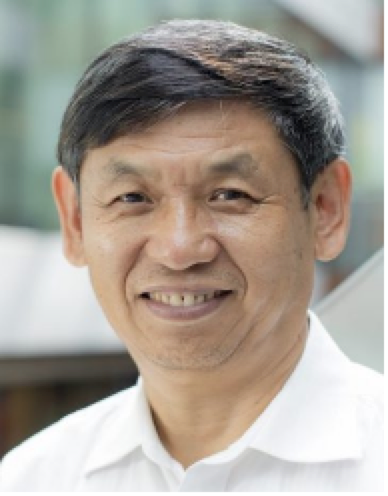
Chengqi Zhang
Associate Vice President
University of Technology Sydney (UTS)
Title: Interactive Deep Metric Learning
Abstract
The embedding-based data mining is to transform the raw data into useful information that is easy to consume by the downstream tasks, such as classification, predictive analysis, and clustering. The embedding function is traditionally dominated by various pattern mining algorithms and is recently driven by the deep learning-based embedding technique. In this talk, I will briefly introduce our recent data mining practices on the application domain of big healthcare data, specifically Interactive Deep Metric Learning.
Yun Yang
Full professor at School of Software and Electrical Engineering
Swinburne University of Technology
Title: Cost Effective Data Placement in the Cloud for Efficient Data Access of Online Social Networks
Abstract
Online social networks are organised around users who have certain expectations from their network provider, such as low latency access to both their own data and their friends’ data, often very large, e.g. videos, pictures etc. Replication of data can be used to meet these requirements and geo-distributed cloud services with virtually unlimited capabilities are suitable for large scale data storage. However, social network service providers often have a limited monetary capital to store every piece of data everywhere to minimise users’ data access latency. Therefore, it is crucial to have optimised data placement to fulfil the users’ acceptable latency requirement while having the minimum cost for social network providers. In this seminar, we address key problems including how to find the optimal number of replicas, how to optimally place the datasets and how to distribute the requests to different datacentres.

Peizhuang Wang
Full professor
Liaoning Technical University
Title: Highest algorithm for linear program
Abstract
The idea of the talk is based on Wang/s Cone cutting theory, which yields a group of special techniques. Combining the highest principle with those algorithms, we are expected to build the strong polynomial algorithms.

Jing He
Full professor at School of Software and Electrical Engineering
Swinburne University of Technology
Title: Is NP=P? A Polynomial-time solution for finite graph isomorphism
Abstract
This talk will introduce a polynomial-time solution for finite graph isomorphism. It targets to provide a solution for one of the seven-millennium problems: NP versus P. Three new representation methods of a graph as vertex/edge adjacency matrix and triple tuple are proposed. A duality of edge and vertex and a reflexivity between vertex adjacency matrix and edge adjacency matrix were first introduced to present the core idea. Beyond this, the mathematical approval is based on an equivalence between permutation and bijection. Because only addition and multiplication operations satisfy the commutative law, we proposed a permutation theorem to check fast whether one of two sets of arrays is a permutation of another or not. The permutation theorem was mathematically approved by Integer Factorization Theory, Pythagorean Triples Theorem and Fundamental Theorem of Arithmetic. For each of two n-ary arrays, the linear and squared sums of elements were respectively calculated to produce the results.
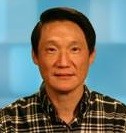
Philip S. Yu
Professor and the Wexler Chair in Information Technology at the Department of Computer Science
University of Illinois at Chicago
Title: Broad Learning: A New Perspective on Mining Big Data
Abstract
In the era of big data, there are abundant of data available across many different data sources in various formats. “Broad Learning” is a new type of learning task, which focuses on fusing multiple large-scale information sources of diverse varieties together and carrying out synergistic data mining tasks across these fused sources in one unified analytic. Great challenges exist on “Broad Learning” for the effective fusion of relevant knowledge across different data sources, which depend upon not only the relatedness of these data sources, but also the target application problem. In this talk we examine how to fuse heterogeneous information to improve mining effectiveness over various applications, including social network, recommendation, malware detection, etc.